

MakerBot Backs TOM: Melbourne for 3D Printing Assistive Tech
Last Updated: June 5, 2026
Reading Time: 5 Minutes
Last Updated: June 5, 2026
Reading Time: 5 Minutes
Browse products related to the article

$11,884.30


$5,058.90
Tikkun Olam Makers, or TOM, is a global volunteer movement designing affordable 3D printed assistive devices for people with disabilities. The Melbourne arm of TOM teamed up with MakerBot to launch TOM Developer Groups, the first ongoing 3D printing assistive technology design hub of its kind in Australia. Developer Groups carry forward the work of the Melbourne Makeathon. Volunteer teams turn prototype devices into TOM Products and share them globally through a public-domain platform. MakerBot 3D printers power the prototyping. Past Makeathon outcomes include a wheelchair-mounted magnetic ramp for Stacey, a modified family tricycle for Mandy, a one-handed golf glove for Beau, and a Bluetooth dog guide harness for Sif. Here is what the partnership delivered, what 3D printing assistive technology means for Australian buyers today, and which MakerBot products fit the workflow.
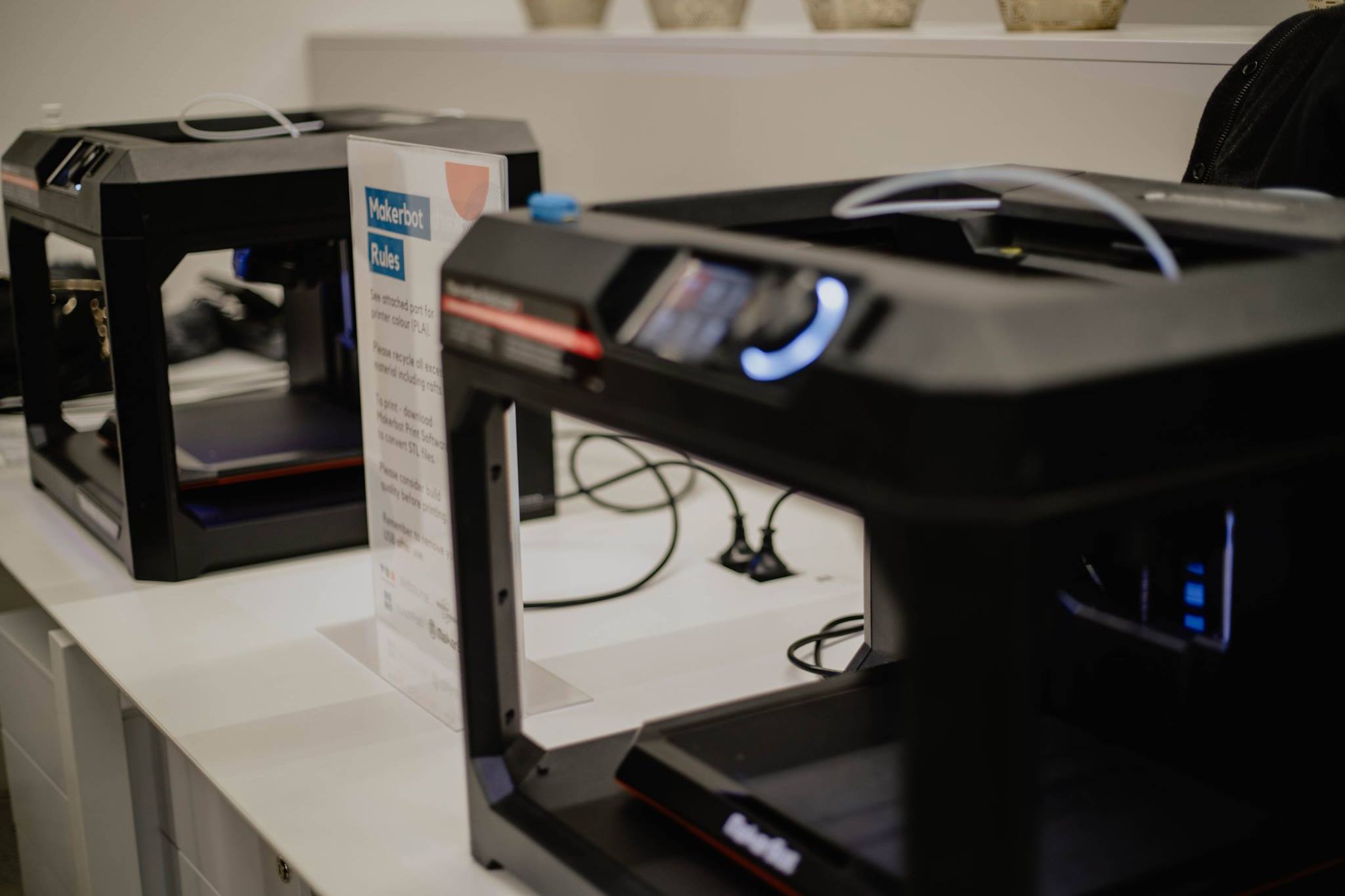
Tikkun Olam Makers, or TOM, started as a global movement of volunteer designers, engineers, and end users. The name comes from a Hebrew phrase meaning "repairing the world". TOM teams build assistive devices for people whose needs sit outside what mainstream medical-device markets supply.
The Melbourne arm runs as TOM: Melbourne. Its flagship event is the Makeathon, a multi-day sprint where teams design and prototype 3D printing assistive technology for named beneficiaries. Developer Groups extend the Makeathon work past the sprint window. Teams meet on a recurring basis to refine prototypes, run user testing with the beneficiaries, and document the design well enough to publish.
Once a device reaches the TOM Product stage, the team uploads it to a global public-domain platform. Any maker or organisation worldwide downloads the files, prints parts on a MakerBot 3D printer, and assembles the device for a local user. One Melbourne weekend of work becomes a globally accessible assistive device.
Assistive devices are a strong fit for desktop 3D printing for three reasons. First, each device is a one-off or small batch. Injection moulding and CNC machining do not scale economically below the hundreds. Second, fit and ergonomics drive the design. A wheelchair user, a one-handed user, or a vision-impaired user often needs the device shaped around their body. Iteration speed matters more than throughput. Third, the per-part cost on a MakerBot 3D printer is low enough for volunteer-run teams to keep printing while the design evolves.
MakerBot has backed TOM internationally for years. The Melbourne partnership extends this footprint into Australia and into the Australian 3D printing assistive technology community. Alloys is the Australian distributor for MakerBot and supports both procurement and after-sales service for community labs, schools, and TOM Developer Groups around the country.
Real Makeathon outcomes show the scope of what 3D printing assistive technology covers. Each device started as a brief from a named beneficiary and went through volunteer-led iteration:
Stacey, portable magnetic ramp: A wheelchair-mounted ramp stowed in the chair. Stacey deploys it to mount curbs and travel independently without waiting for a kerb cut.
Mandy, modified tricycle: Mandy has two prosthetic arms and two prosthetic legs. The team built a tricycle modification letting her ride with her family.
Beau, one-handed golf glove: Beau became a quadriplegic and wanted to keep playing golf. The team designed a glove to hold a club through the swing, and to help with taking clubs in and out of the bag.
Sif, Bluetooth dog guide harness: Sif uses a guide dog. The team designed an adjustable harness with Bluetooth working whether Sif is wearing flat shoes or heels.
None of these devices exists in a hospital procurement catalogue. They exist because a local volunteer team in Melbourne, working with MakerBot 3D printers, designed them and published the files.
Kylie Appel from TOM: Melbourne describes the partnership with MakerBot as a way to demonstrate the power of collective action and technological innovation. The goal is for local Australian community members to use their skills to make a positive impact for people living with disabilities. Volunteer designers and engineers do the work. End users (TOM calls them the Need-Knowers) brief the team and test every iteration.
This collaboration model turns ordinary 3D printing into 3D printing assistive technology with lived-experience design built in. It is also why TOM Developer Groups outlast the Makeathon weekend.
For Australian buyers who want to stand up a similar assistive-tech 3D printing workflow, the current MakerBot range covers the main use cases. The MakerBot Method is the entry into professional dual-extrusion printing for medical-adjacent prototypes. For larger devices like ramp components or full-body braces, the MakerBot Method XL handles the bigger build envelope. For schools, occupational therapy teaching clinics, and community labs, the MakerBot Sketch family covers the lighter end of the workflow at lower per-printer cost.
NDIS providers have been steadily adopting 3D printing assistive technology as a way to deliver custom devices traditional manufacturing cannot price-justify. Occupational therapists are using desktop printers in clinic to iterate splints and adaptive utensils between sessions. University design schools are building Makeathon-style programmes into coursework. For pricing context across the MakerBot range, see our 3D printer cost guide for Australia.
A Melbourne university example of a multi-printer MakerBot 3D printing assistive technology deployment is our University of Melbourne MakerBot Innovation Centre case study. A broader view on why educational institutions invest in 3D printing labs sits in our five benefits of 3D printing in higher education guide.
Background on TOM globally is available at tomglobal.org.
What is TOM (Tikkun Olam Makers)?
Tikkun Olam Makers, or TOM, is a global volunteer movement designing affordable 3D printed assistive devices for people with disabilities. Volunteer teams partner with end users (called Need-Knowers) to design custom devices, then publish the files on a public-domain platform so anyone worldwide prints and assembles the device locally.
How does 3D printing assistive technology help people with disabilities?
3D printing assistive technology lets volunteer teams and clinicians design one-off devices mainstream medical-device markets do not supply. Each device is shaped around a specific user's body, environment, and use case. Common examples include adaptive utensils, prosthetic accessories, mobility aids, and ergonomic tool grips.
What is a TOM Developer Group?
A TOM Developer Group is the second phase of the TOM process. After a Makeathon weekend produces prototype assistive devices, Developer Groups continue meeting to refine the prototypes, test them with the beneficiaries, and document the design well enough to publish as TOM Products on the global public-domain platform.
Which MakerBot 3D printer is best for assistive technology prototyping?
Most assistive technology prototyping fits the MakerBot Method, which handles dual-extrusion engineering plastics for functional parts. Larger devices fit the MakerBot Method XL. Schools, OT teaching clinics, and community labs typically run the MakerBot Sketch family at a lower per-printer cost, with the same MakerBot software ecosystem.
How does TOM: Melbourne work with Australian volunteers?
Melbourne's TOM team runs a Makeathon as its flagship event, then carries the work forward through Developer Groups. Volunteer designers, engineers, and makers commit recurring time. End users brief the teams and test every iteration. MakerBot 3D printers handle the 3D printing assistive technology prototyping. Alloys supports the MakerBot installation as the Australian distributor.
Want to view the entire range of MakerBot products? Click here.
Browse products related to the article
$11,884.30
$5,058.90