

Nitrogen SLS 3D Printing: A Sinterit Lisa X Setup Guide
Last Updated: May 19, 2026
Reading Time: 6 Minutes
Last Updated: May 19, 2026
Reading Time: 6 Minutes
Browse products related to the article


$38,160.00


$33,250.00
Do you need nitrogen sls 3d printing on the Sinterit Lisa X? For PA11 powders, yes. PA11 reacts with oxygen at sintering temperatures and loses strength without an inert atmosphere. PA-12 prints fine in normal air. The Lisa X draws about 0.51 cubic metres of nitrogen an hour during PA11 work. So the next question is whether you supply it from a bottle or a generator. This guide answers both questions and gives you the Australian planning numbers for a Lisa X install.

Nitrogen is an inert gas. In the SLS process, the print chamber heats powdered polymer to a point near melting. A laser then fuses each cross section. At those temperatures, oxygen attacks sensitive polymers. The result is brittle parts, uneven surface finish, and shorter powder refresh cycles.
Flooding the chamber with nitrogen displaces the oxygen. The polymer stays chemically stable through every layer. Sintering is uniform. Mechanical properties hold to spec. Recycled powder lasts longer because it has not been cooked in air. For demanding polymers like PA11, the gas environment is the difference between a usable part and a failed print.
Lisa X printers have gas supply lines built into the chamber for this exact reason. Argon also works, but nitrogen is the practical choice in Australia. It is cheap, widely supplied, and safe to vent in a normally ventilated workshop.
Sinterit recommends nitrogen for the PA11 family. The PA-12 family does not need it. Here is the practical breakdown across the current Sinterit powder library:
Nitrogen required: PA11 CF, PA11 Onyx, PA11 ESD, and PA11.5.
No nitrogen required: PA-12 Industrial, PA-12 Smooth, Flexa Performance TPU, and Polypropylene.
PA11 CF is the headline application for nitrogen sls 3d printing. The carbon fibre fill gives finished parts strength comparable to some aluminium alloys. Product designers reach for it in functional prototypes and small-batch end-use components. PA11 ESD covers electronics work where static dissipation matters. PA11 Onyx and PA11.5 sit between the two on strength and elongation.
If your application sits inside the PA-12 family, you do not need to plan for a nitrogen supply on day one. Most Australian buyers start with PA-12 and add PA11 once a first end-use application calls for it.
| Factor | Nitrogen bottle | Nitrogen generator |
|---|---|---|
| Upfront cost | Low | High |
| Supply pattern | Refill cycle | Continuous |
| Best for | Occasional or small print jobs | Continuous or multi-shift production |
| Downtime risk | Refill interruptions | None once installed |
| Long-run cost per print | Higher | Lower |
| Install effort | Minimal | Plumbing, electrical, maintenance |
A standard 20L bottle at 300 bar holds about 5.3 m³ of nitrogen. It runs the Lisa X for roughly 10 hours of printing. A 40L bottle at 150 bar holds about 6 m³ and runs for around 11 hours. Useful for a few jobs a week, or for trialling PA11 before you commit capital to a generator.
A nitrogen generator runs continuously off mains air, so once the install is done you never schedule around a refill. Sinterit specifies a minimum flow rate of 10 l/min at 5 bar pressure and a purity of at least 99.5 per cent. Upfront cost is higher. But if you are running multi-day PA11 jobs or printing overnight, you recover the capital quickly through eliminated downtime and lower per-cubic-metre gas cost.
For Australian buyers in regional locations, the bottle pathway also depends on how close your nearest BOC or Coregas depot is. Long refill lead times push the economics toward a generator earlier than the per-print numbers alone suggest.
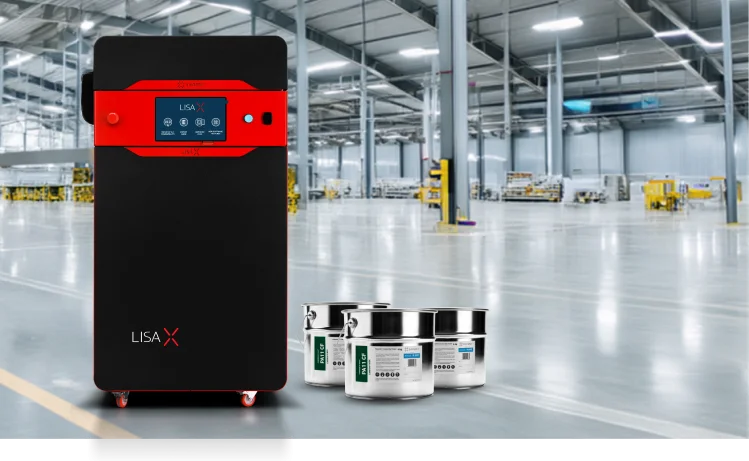
Lisa X nitrogen demand is steady through every PA11 print. The numbers you need for capacity planning are:
Consumption rate: 0.51 m³ per hour, or 8.5 l/min.
24-hour print job: roughly 12.24 m³ of nitrogen total. Always budget extra reserve for losses and longer-than-expected jobs.
Pressure reduction valve: set between 5 and 6 bar at the Lisa X inlet.
Purity: 99.5 per cent or higher.
Generator flow rate: at least 10 l/min sustained.
In the Slice tab inside Sinterit Studio, you can read the estimated print time and nitrogen demand for each job after you slice it. Use that number to choose between bottle and generator on a per-project basis if you are still working out your typical workload.
We recommend confirming your gas supply path before the Lisa X arrives on site. The printer ships fully assembled in an impact-resistant transport case and weighs 145 kg. It lands ready to print, but it needs the nitrogen line in place before the first PA11 job. For a fuller specs and capability rundown, see our Sinterit Lisa X overview.
Do you need nitrogen for SLS 3D printing?
Only for PA11 powders. Nitrogen is required for SLS 3D printing with PA11 CF, PA11 Onyx, PA11 ESD, and PA11.5 on the Sinterit Lisa X. PA-12, Flexa TPU, and Polypropylene print successfully in normal atmosphere without a nitrogen supply.
Which SLS materials require nitrogen?
PA11 powders on the Sinterit Lisa X require a nitrogen atmosphere to prevent oxidation during sintering. That covers PA11 CF, PA11 Onyx, PA11 ESD, and PA11.5. PA-12 Industrial, PA-12 Smooth, Flexa Performance TPU, and Polypropylene do not need nitrogen for sls printing.
How much nitrogen does the Sinterit Lisa X use per hour?
Sinterit Lisa X consumption is approximately 0.51 m³ of nitrogen per hour, or 8.5 l/min, during PA11 printing. A 24-hour print uses around 12.24 m³ in total. Always budget extra reserve capacity to cover losses and any overrun.
Is a nitrogen bottle or a nitrogen generator better for SLS printing?
For occasional or small-batch printing, a nitrogen bottle is the lower-cost option and the easier install. For continuous, multi-shift, or long-duration production, a nitrogen generator for 3d printing wins on cost per cubic metre and removes refill downtime. The break-even point depends on your job length and printing frequency.
What nitrogen purity do I need for Lisa X SLS printing?
Minimum nitrogen purity on the Sinterit Lisa X is 99.5 per cent. Lower purity admits trace oxygen and water vapour, which degrades PA11 mechanical properties. Confirm purity with your gas supplier or generator manufacturer before your first PA11 job.
Can you run PA-12 on Lisa X without nitrogen?
Yes. PA-12 Industrial and PA-12 Smooth do not need an inert atmosphere on the Lisa X. If your application sits inside the PA-12 family, you do not need a nitrogen supply on day one. You add bottles or a generator later when you move into PA11 work.
Scoping a Lisa X install in Australia? Want help sizing your nitrogen supply for the workload you expect to run? Talk to us. We match the printer, powders, and gas supply pathway to your application. Want to view our full range of Sinterit SLS printers and accessories? Click here.
Browse products related to the article
$38,160.00
$33,250.00